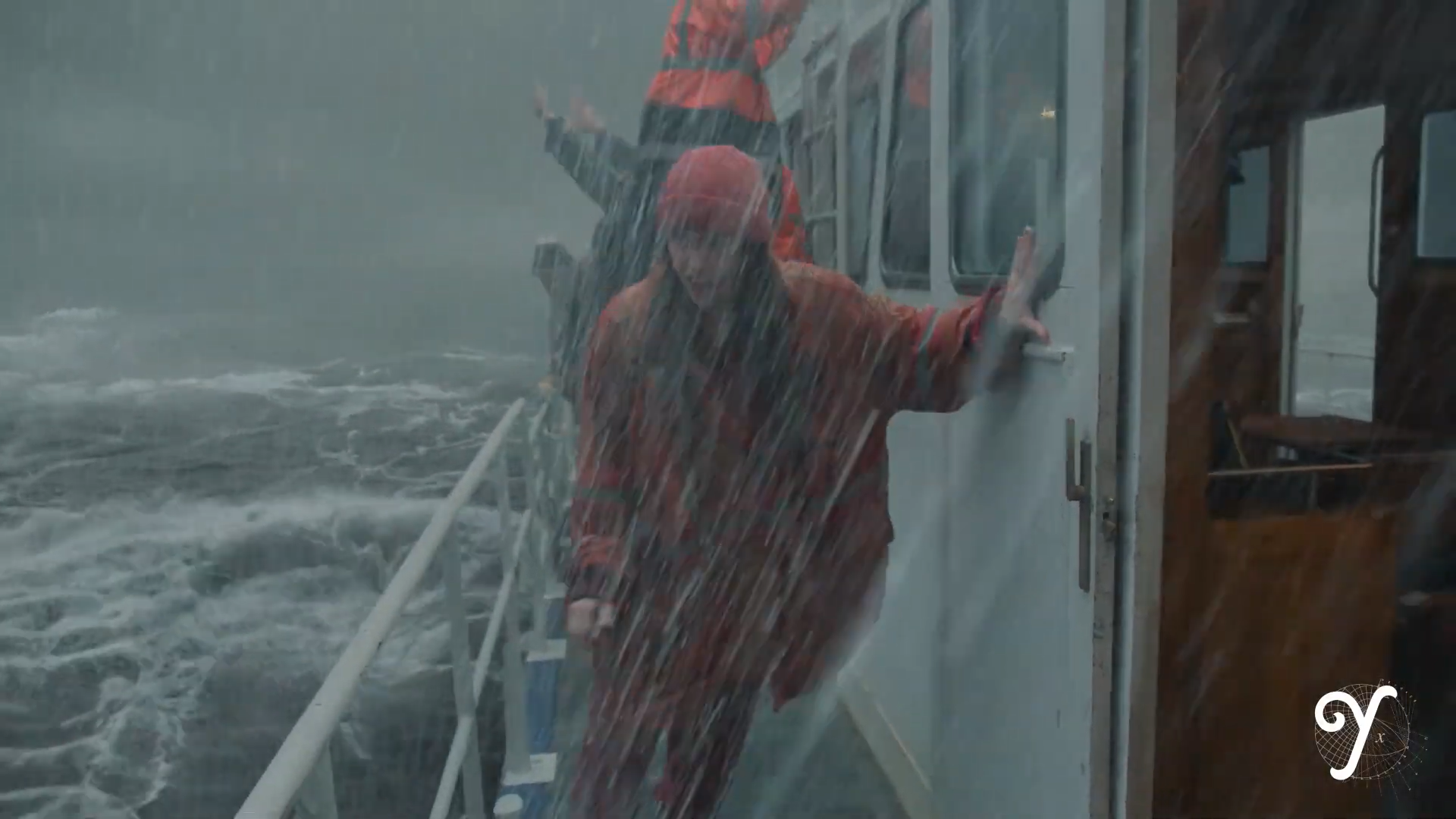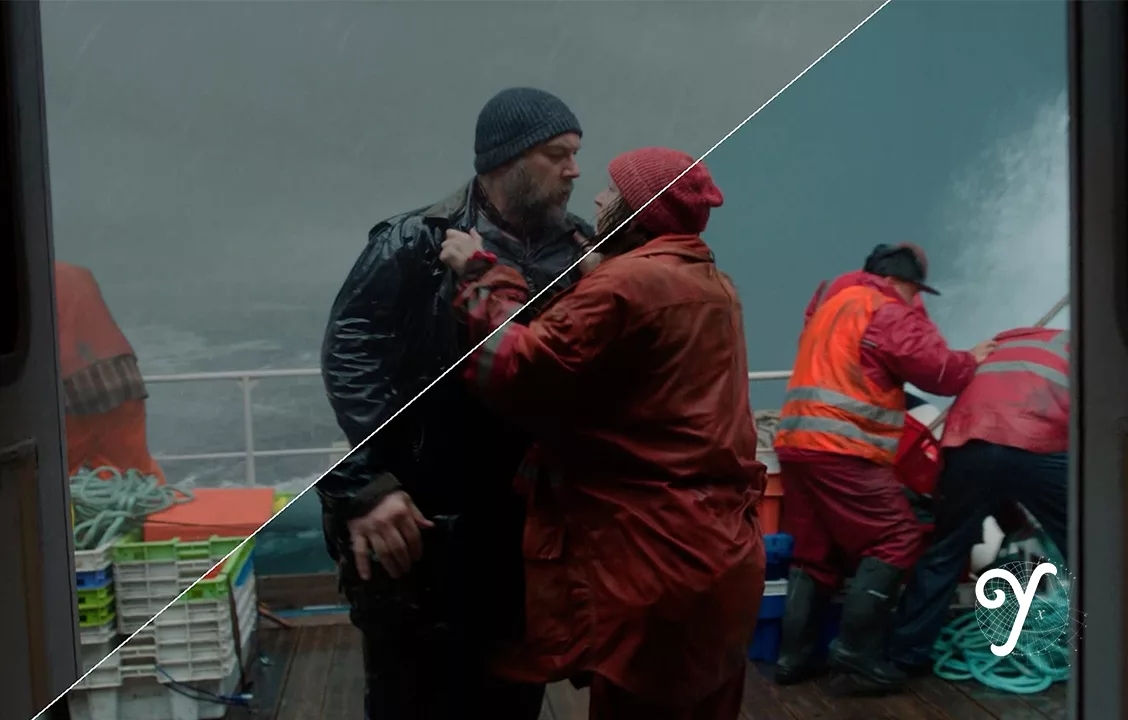
A Vision Rooted in Realism
The sequence was born from a strong creative intent led by VFX Supervisor Lesley Robson-Foster: to deliver a deeply immersive and realistic experience of life at sea. Shot in a controlled basin, the goal was not to simulate reality from a distance, but to place the camera directly onboard the boat, fully embedded within the action.
Robinson wanted to accentuate the movement of the swell, giving the sequence a visceral sense of instability. This intention becomes particularly impactful when a sailor falls into the water, a moment where the rolling motion of the boat had to be deliberately amplified to heighten tension and disorientation. The challenge was clear from the start: realism would not come from the movements of the platform on the set, but from carefully controlled exaggeration grounded in physical authenticity.

Carefully chosen shooting constraints
To preserve natural interactions between actors, water, and wind, it was deliberately chosen to avoid blue or green screens entirely. While this allowed for more believable performances and environmental effects, it still introduced significant complexity for the VFX team.
Without chroma key setups, there was no straightforward way to isolate elements in post-production. Every interaction — whether inside the boat or on deck — required precise rotoscopy work. This meticulous process ensured that digital effects could integrate seamlessly with the live-action footage.
Filming in a real basin also meant capturing genuine water behavior, which became both an advantage and a constraint. The authenticity of the elements was invaluable, but it demanded a highly technical approach later on to enhance and control those same elements without breaking realism.
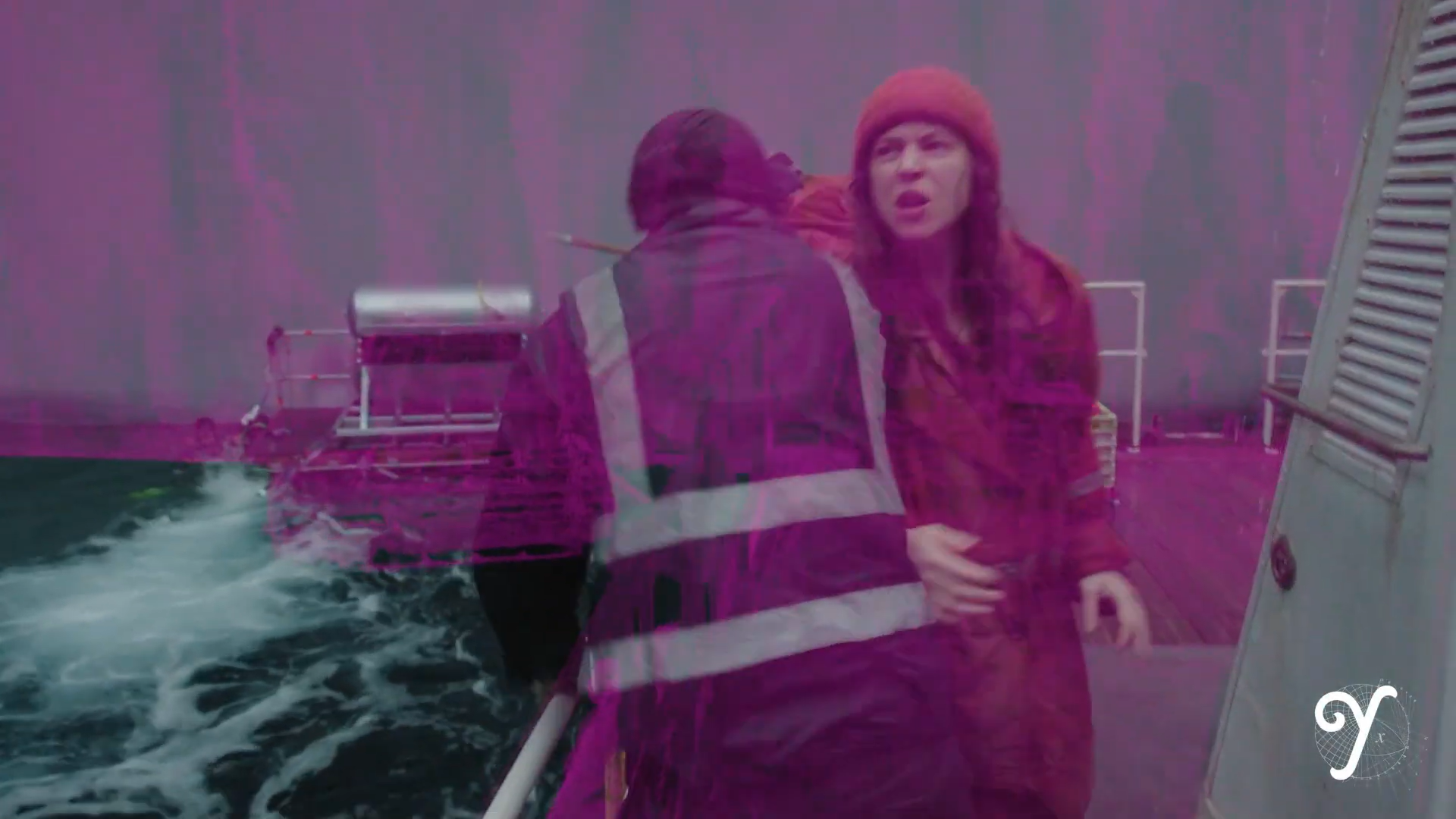
Decoupling motion to bring a realistic sea to screen
One of the core challenges of the sequence came from the dual movement of both the camera and the boat. In standard tracking workflows, the camera is treated as stable within a scene. Here, however, the camera was physically onboard a moving platform, creating a complex interplay of motion.
To address this, the team developed a method to effectively subtract the camera’s movement from that of the boat. By introducing witness cameras on set, they were able to isolate and reconstruct the boat’s motion within a usable coordinate system. This technical approach allowed the team to manipulate and enhance the boat’s movement while maintaining coherence with the original footage.
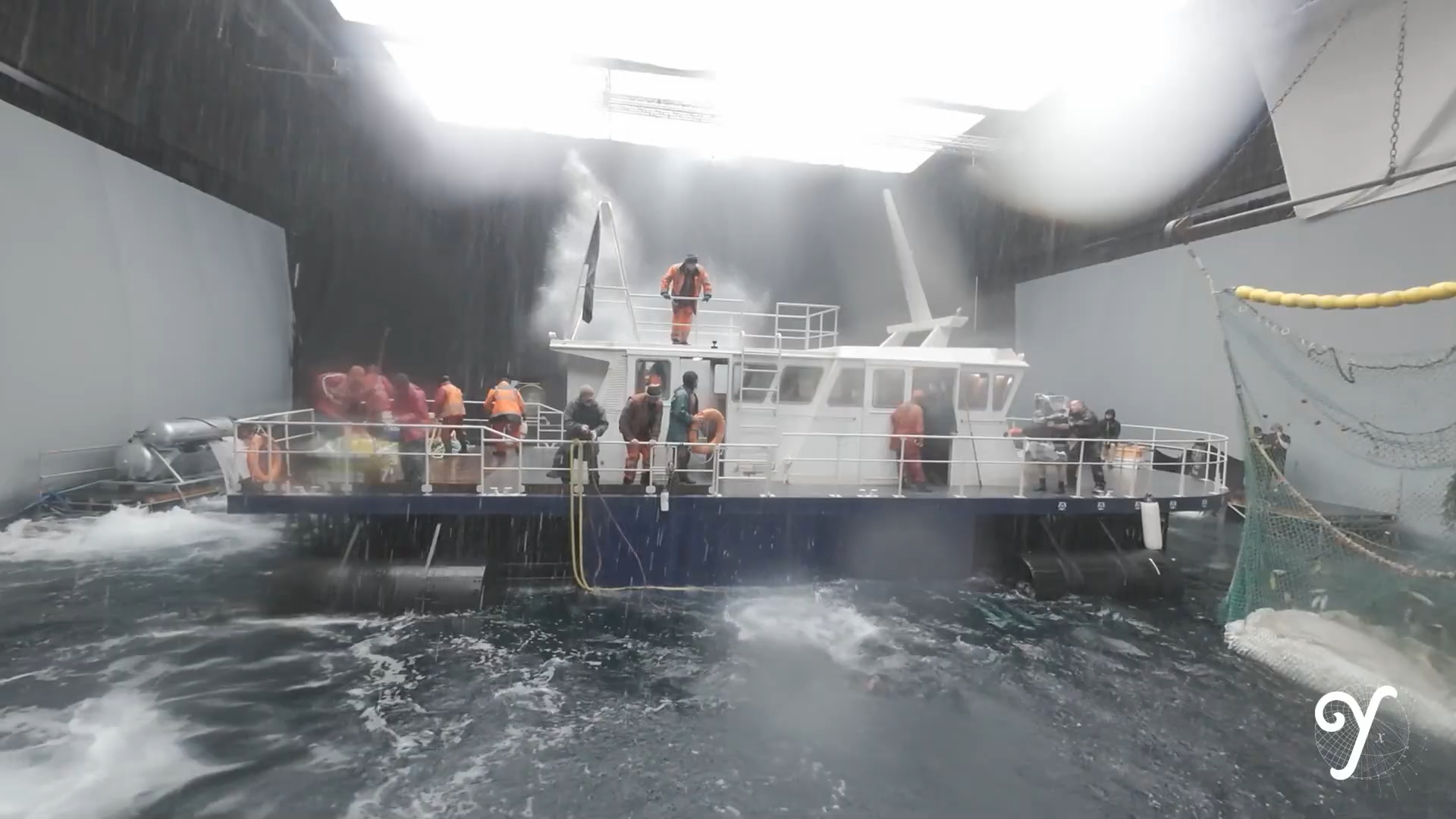
With the motion problem solved, the team focused on enhancing the water itself and all the other elements. The waves were digitally augmented to interact convincingly with the boat, requiring detailed FX simulations that respected the physics of the scene.
Rather than replacing practical elements, the team worked to blend them with digital enhancements. Water droplets, for example, were amplified using simulations to seamlessly integrate with those captured on set.
The sequence, ultimately split into multiple shots for production purposes, required around five months of work and close collaboration across departments. The result is a seamless plan sequence that combines practical realism with sophisticated visual effects—a testament to both creative ambition and technical precision.