Meet the Yardeners – the passionate team at The Yard, who cultivate every day the seeds of creativity, transforming them into striking visual effects, fruitful collaborations, and unforgettable stories.
This week, we’re thrilled to introduce Amelie Rey, one of our talented Lead Compositing Artists. During her 15-year career in compositing, Amelie has honed her craft at some of the most renowned studios, taking her from France to Canada, New Zealand, and the United Kingdom, where she has worked on an impressive number of projects, including famous blockbuster films and franchises.
Hello Amelie ! Could you please explain your role at The Yard ?
In my role as a Lead Compositor, I am in charge of establishing the look of the shots and of defining the methodology for the team to achieve it.
The Compositing Supervisor and I work closely together to define and prepare the workflow and overall look of the sequences, while making sure the artists have all the information and tools they need to succeed in their tasks.
As such, I oversee sequences by ensuring continuity in the edit and maintaining consistency in color and various elements across every shots. I also guide the compositing artists on both the artistic direction and the technical execution to tranlsate the vision to life.
What brought you to pursuing a career in Compositing ?
I’ve always been captivated by the magic of cinema and its ability to make the impossible feel completely real. Growing up, I loved animated films—from Disney classics to Japanese anime—and later, like many VFX artists of my generation, movies such as The Matrix, The Lord of the Rings, and early Tim Burton’s films (among others!) truly sparked my love for visual storytelling and visual effects. I was amazed by how pure imagination could be brought to life and transformed into something believable on screen.
That blend of art and technology is what inspired me to focus on digital compositing, as a way to contribute to that cinematic magic.
Some of Amelie’s screen inspirations:
What do you find great about Compositing ?
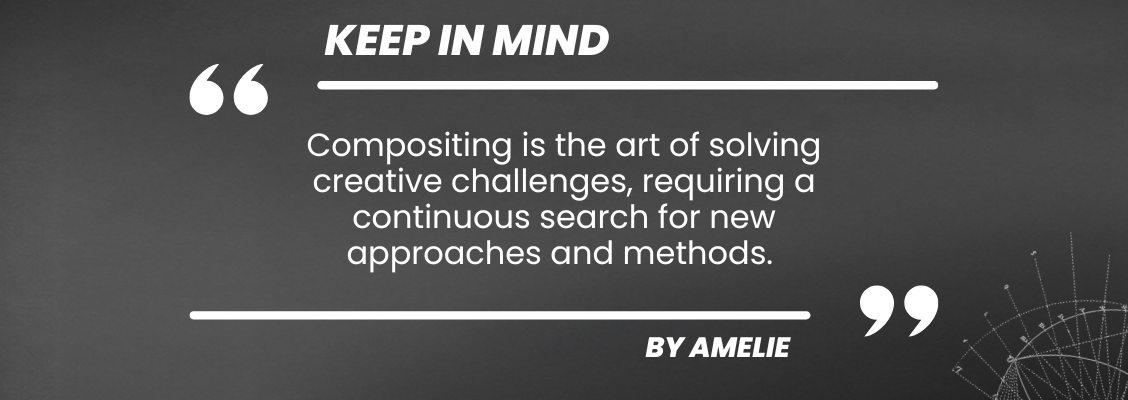
For me, the magic of compositing lies in its problem-solving nature. We are given creative challenges, and it’s our job to define the look that will translate a vision, and work on the perfect integration of all elements, by using the most efficient and optimized technical solutions.
Every project is different, every shot unique, so it’s a continuous search for new approaches and methodologies.
In your view, what are the main challenges in Compositing ?
One of our many challenges is ensuring that any work we do on an image goes completely unnoticed. A large part of a compositor’s job is analyzing the data we are given—lens, camera movement, lighting, depth of field, and all the subtle details that shape an image. Making the image feel authentic is a meticulous process of recreating those elements as closely as possible to the original plate, refining even the tiniest details.
Compositing is the final step of the VFX pipeline, where we bring together the work of all departments. Good communication is essential to make everything come together seamlessly. We are responsible for the final image and overall quality, meeting delivery deadlines, and managing the pressure that comes with it.
You’ve worked on different productions since you’ve joined The Yard. Could you please tell us a bit more about your experience on these projects? Any that was more challenging than the other ?
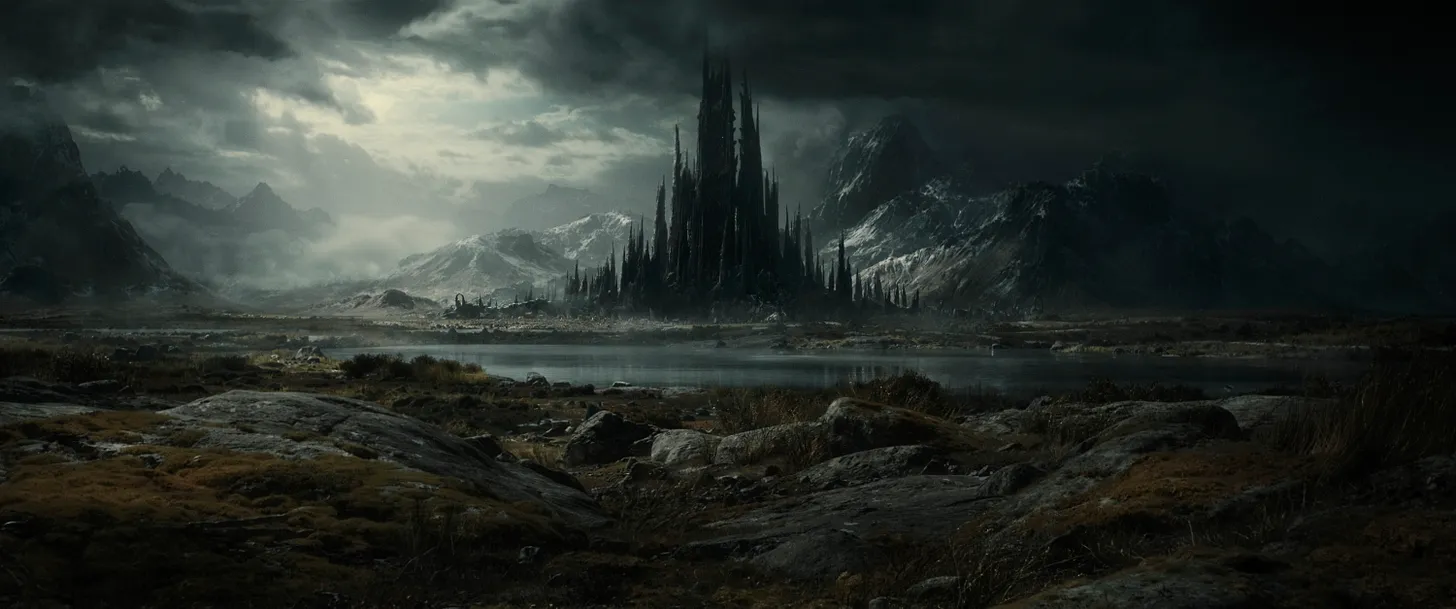
I joined The Yard as the studio was crafting the visual effects of The Rings of Power-Season 2. My mission included one of the biggest full CG shots of the season : Gurdreth’s environment changing in a blast from summer to winter.
Several departments were involved, because the shot contained many assets : mountains, trees, a river, a massive tower, and even a huge magical explosion ! Close collaboration with the FX and environment teams was essential and I really enjoyed playing my part in it.

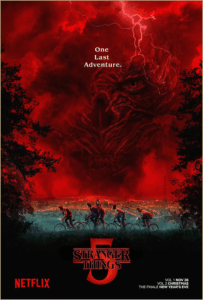
More recently, I worked on the final season of Stranger Things. It was a massive project as our team handled over 500 shots over the course of the project. I collaborated closely with production and supervision, helped oversee sequences, and supported a large team of artists alongside my fellow leads. It was demanding, but seeing everything come together, with both a satisfied client and a happy team, was incredibly rewarding.
During your career, you’ve worked on various film genres. Is there a genre that you prefer to work on ?
Science fiction and fantasy are definitely my favorite genres to work on. They allow me to have the most fun and push my creativity to its limits. Once you understand the client’s vision, the most exciting part is bringing it to life.
For me, these genres perfectly capture what compositing is all about: bringing together different, often unreal elements—such as CG environments, creatures, matte paintings, and FX—and blending them into a cohesive, believable image. It’s not just about matching reality; it’s about helping to create a new world that viewers can relate to.
Still of Gurdreth shot from The Rings of Power – Season 2 :
Looking back on your career, is there a particular project that stands out to you as the most memorable? If so, why?
I’d have to say Avatar: The Way of Water. Not only because it took over a year of my life, but also because it was by far the biggest project I’ve worked on in my career. Getting the chance to take part in a production of this scale doesn’t happen very often: an almost entirely CG movie, in stereoscopic 3D, packed with complex creature and FX work.
Integrating the CG environments and characters into live-action plates was a real challenge, but also incredibly enjoyable. We got to experiment with optical effects and play extensively with light, color, and texture.
Standards were high; still it was a fantastic creative adventure, and I truly had an amazing time working on it!
What major evolution do you see upcoming in Compositing ?
How not to mention AI… We’ve been using deep learning tools for quite some time, but recently they’ve begun to transform our workflow in more practical ways. In compositing, areas like roto, keying, cleaning, are among the most concerned by those improvements AI tools can bring us. The automation of the most repetitive tasks will allow us to focus more on creative work.
Any piece of advice you’d give to students who choose Compositing for their career ?
It’s important to develop a strong sense of both visual and technical analysis. Compositing isn’t just an artistic job – it also requires a solid technical discipline. Students who are focused on problem-solving and have a constant curiosity for visual and technical developments could become valuable assets to any compositing team !