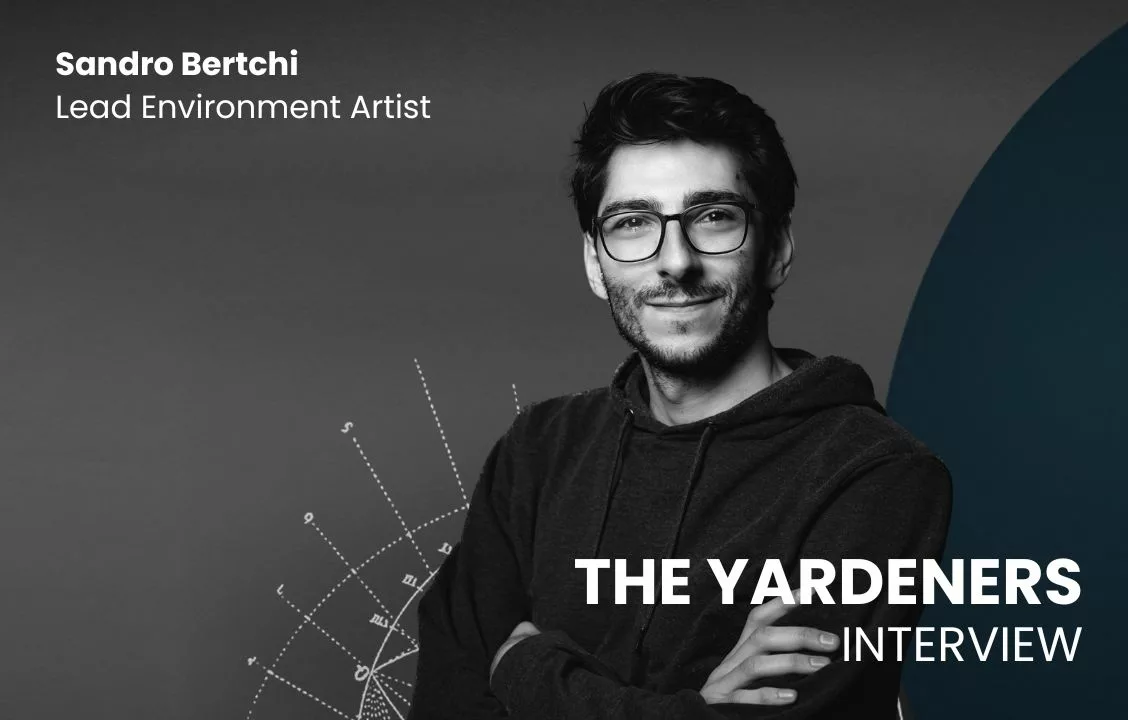
Meet the Yardeners – the passionate team at The Yard, who cultivate every day the seeds of creativity, transforming them into striking visual effects, fruitful collaborations, and unforgettable stories.
We’re thrilled to share our latest conversation with Sandro Bertchi, Lead Environment Artist. With 15 years of visual effects experience, Sandro leverages his broad generalist background to craft digital worlds and lead teams on The Yard’s most ambitious productions.
Hello Sandro ! Could you please explain your current role at The Yard?
Hello everyone ! As an Environment Lead, my role is to make sure that all artists within the Environement Department are well-guided and supported to successfully deliver on client expectations.
I get involved very early on in the project to establish all information, address all the questions related to the various environments we are requested to build, and define all the initial assets and elements needed to create them.
Then, throughout the project, I maintain close task tracking with each artist, sharing relevant data, and feedback relevant to their ongoing work. This allows me to guide the team on both artistic direction and technical execution to ensure we consistently meet tthe production goals.
What brought you to CG environments?
I have always had a passion for creating imagery and environments. From a young age, I loved building scale models of film sets or exploring personal creations.
Over time, as new technologies emerged, I naturally transitioned into CG. My early career allowed me to deepen this passion across various roles, all tied to the Environment discipline—spanning real-time projects, architectural visualization, game trailers, commercials, and, for the past several years, feature film VFX. Creating sets and environments is, and always has been, my true passion.
Some of Sandro’s early inspirations :
What do you enjoy most about bringing sets and environments to life? Is there a particular aspect of the creative process that you find especially rewarding?
I find that the the most rewarding part of this job is how its artistic nature lets us travel. Creating an environment is unique every single time. It transports us into distinct worlds that can be extraordinary and unconventional.
Some of the worlds Sandro contributed to building:

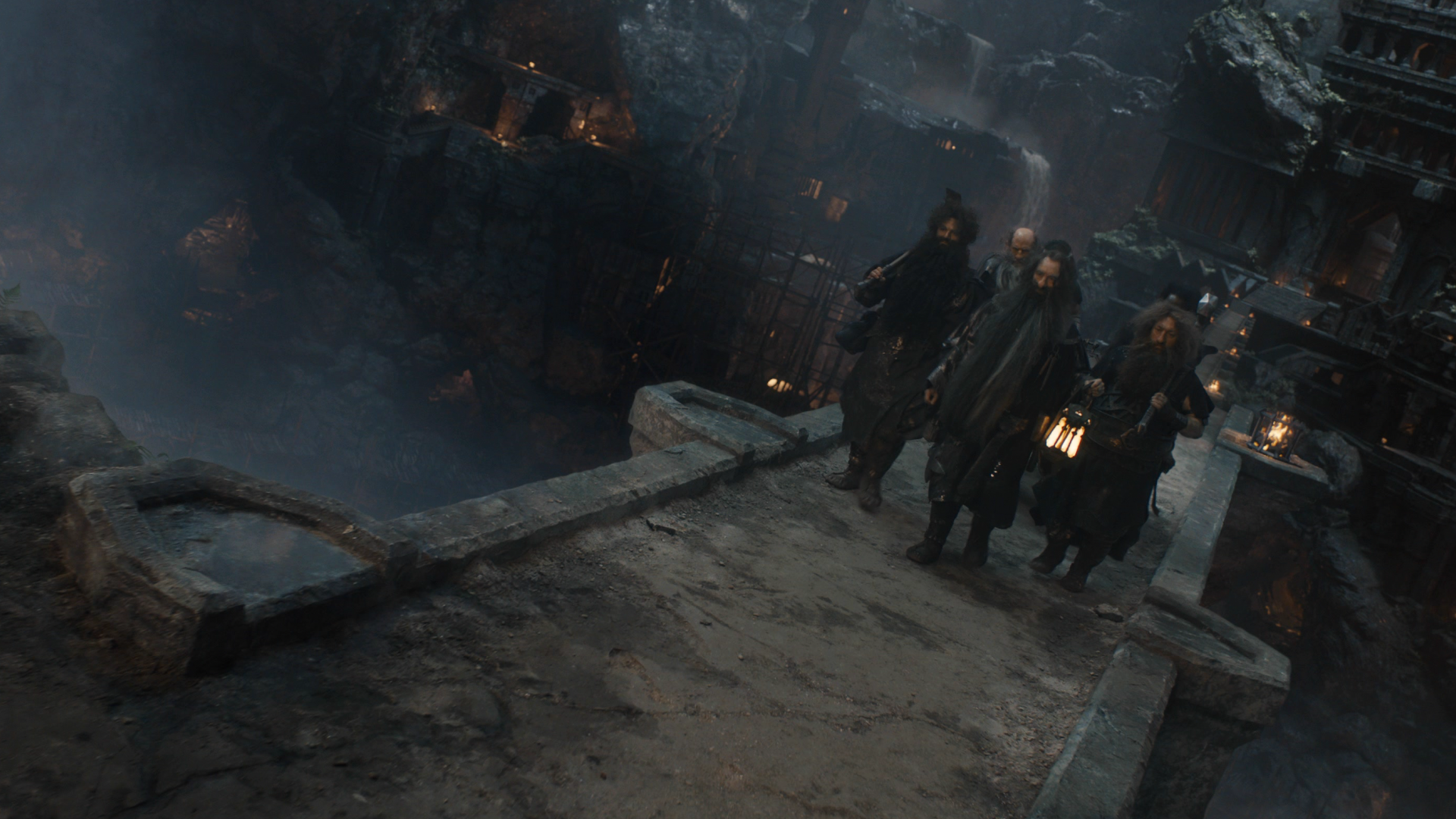
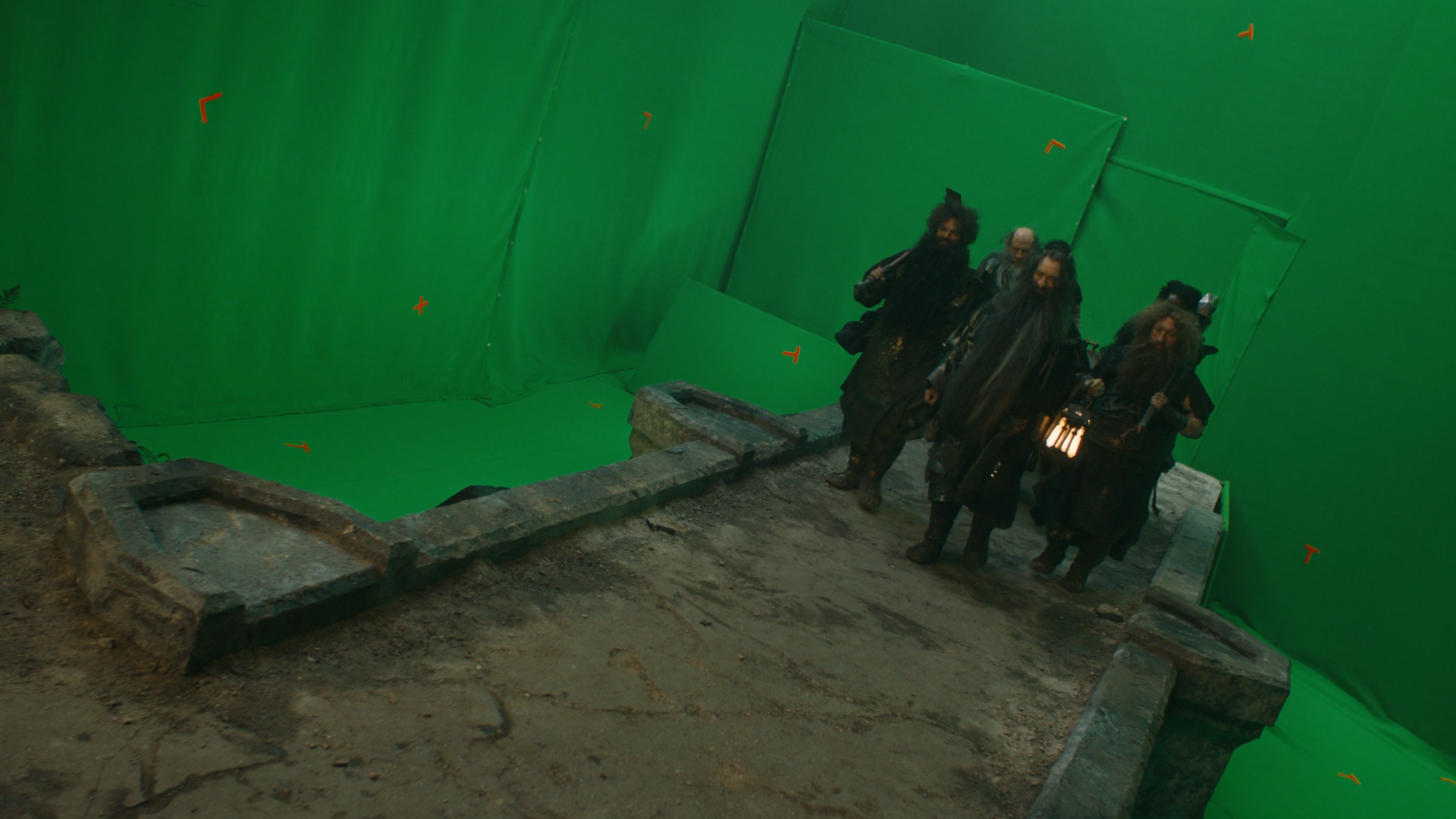
The Lord of the Ring : The Rings of Power – Season 2 (Amazon MGM Studios)
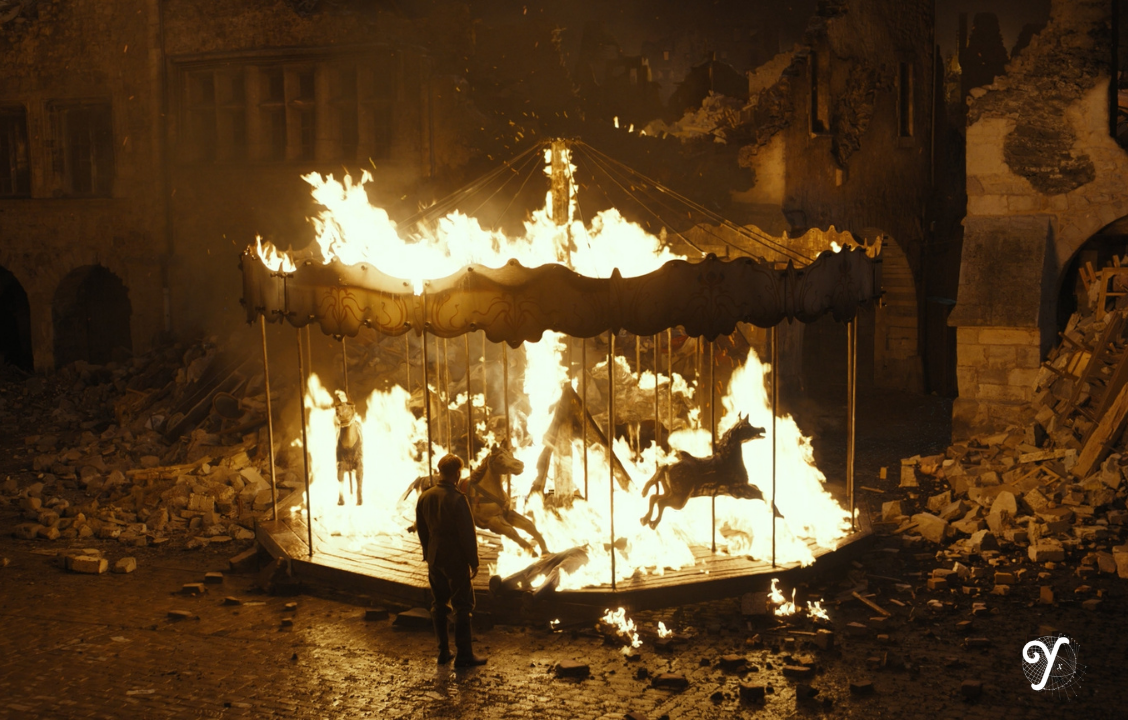
All The Light We Cannot See (Netflix)
I love having that big-picture vision of an environment as it comes together, refining and elevating it zone by zone, detail by detail. Whether working on a small, intimate space or a massive world, there is always a story to tell. It’s often the subtle details and deliberate imperfections that give an environment its soul.
Ultimately, when our creation is shared with the audience, the goal is to make them believe in our story and truly feel that the world exists.
In your view, what are the biggest challenges when creating CG environments ?
I would say the ultimate challenge is maintaining overall cohesion and believability in the final environment, especially as viewers today are accustomed to CG environments across all media—from ads to feature films and series. Audiences have a much more trained eye, and any poorly integrated element immediately stands out. Audience notice any issue of scale, level of detail, or the logical relationship between assets, which could impact the audience overall experience. It takes a continuous effort to preserve that natural balance and consistency, which is precisely what grounds an environment in reality.
How do you work with the other departments ?
Working across departments is one of the most engaging aspects of the job. Setting up clear communication protocols and data workflow habits from day one ensures seamless collaboration.
We work especially closely with Lighting to refine the artistic and technical integration of environments on a shot-by-shot basis. Depending on the project’s needs, we also maintain tight loops with the Assets and FX departments. Ultimately, strong cross-departmental communication allows us to catch potential roadblocks early and avoid unexpected setbacks
Looking back at the different projects you’ve worked on since joining The Yard, how do you adapt your approach to such diverse worlds, and was there one in particular that presented a unique challenge?
I have been at The Yard for a few years now, and I’ve had the opportunity to collaborate on a highly diverse slate of projects, both French and international, varying in scope and duration. I really appreciate the sheer variety of projects The Yard has brought together over the years, as well as the diversity of worlds we build. One day you’re working on the destruction of a historic French monument (Notre Dame on Fire), the next day on a war-torn city (All The Light We Cannot See), or crafting a subterranean kingdom (The Lord of The Rings : The Rings of Power).
Participating in the creation of these diverse worlds is both fascinating and deeply rewarding. Projects usually start with a substantial prep phase to map out required assets and gather comprehensive visual references, both realistic and artistic, aligning our work with the client’s creative vision.
In some cases, existing concept art provided by the client gives us a direct roadmap. One project particularly stands out but I cannot name yet because it is still confidential. Still I can say that the size of the environment was so vast and complex that we were able to put forward several creative proposals, which the client approved. It gave us room to play with narrative details across different zones, introducing another layer of detail and extra depth to give the final shots even more life.
I believe that no single project is inherently more difficult than the next—it mostly comes down to timeline management and organization to ensure a seamless production process.
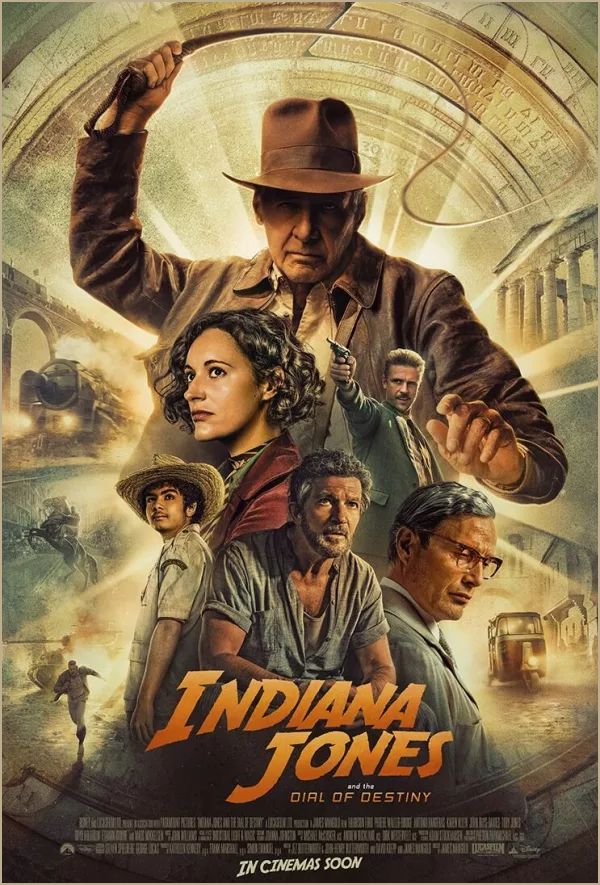
Some of the projects Sandro contributed to:
What major evolution do you see upcoming in your field ?
There are two main industry shifts, in my view. First, the integration of AI—specifically learning to use it as a creative tool rather than a replacement for artists. Second, the USD/Solaris pipeline in Houdini, which is now being adopted across studios everywhere.
Any piece of advice you’d give to students specializing in CG environments ?
I have one to share : always use real-world references. The world is vast and nature is complex, so don’t hesitate to draw inspiration from it.