Building Europe’s Future

  • 2026-02-20
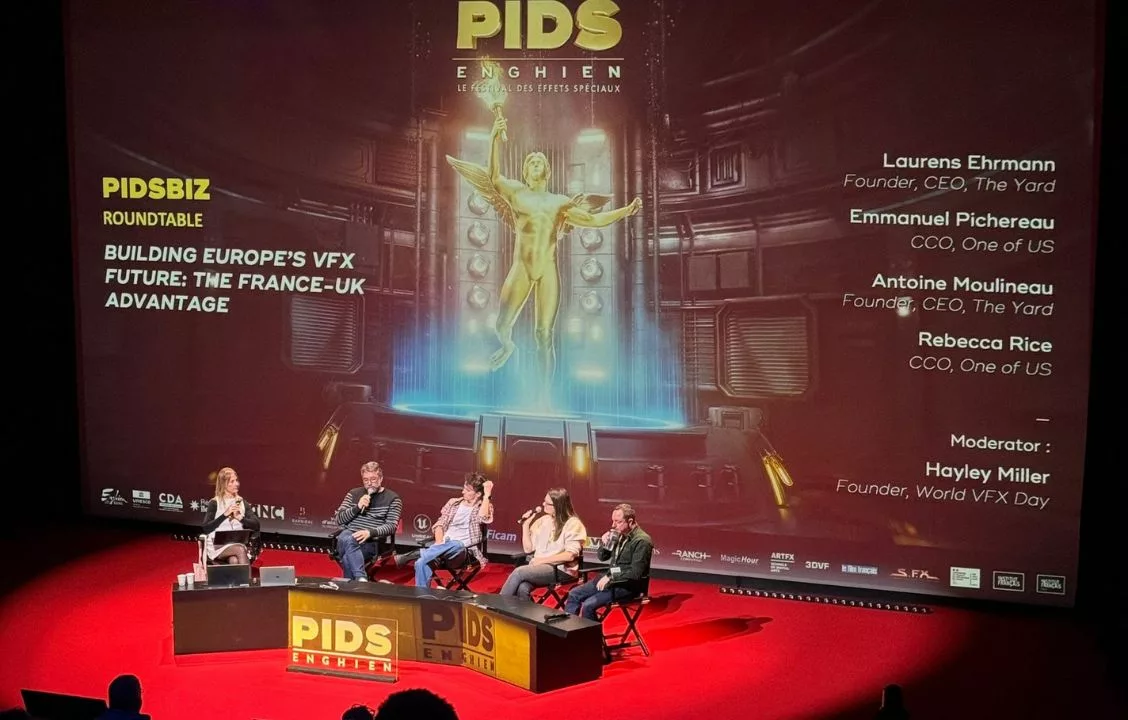
At last month’s PIDS ENGHIEN, leading VFX executives from French studios gathered for a cross-channel roundtable moderated by Hayley Miller, founder of World VFX Day, to explore why the Franco-British connection is emerging as a competitive force for global productions.

As the European VFX industry recalibrates after Brexit, COVID, and global market contraction, the relationship between France and the UK is entering a new phase.

At PIDS ENGHIEN, « Building Europe’s VFX Future : The France-UK Advantage » roundtable brought togehter leaders navigating expansion on both sides of the Channel : Laurens Ehrmann (Founder & Creative Director, The Yard VFX, which opened its London studio in 2024), Antoine Moulineau (Founder & CEO, Light, which opened its London office in 2022), Emmanuel Pichereau (CCO, One of Us, which expanded to France in 2021), and Rebecca Rice (Executive Creative Producer, Mathematic, which registered in the UK end of 2025).

Here are the key highlights of their discussion :
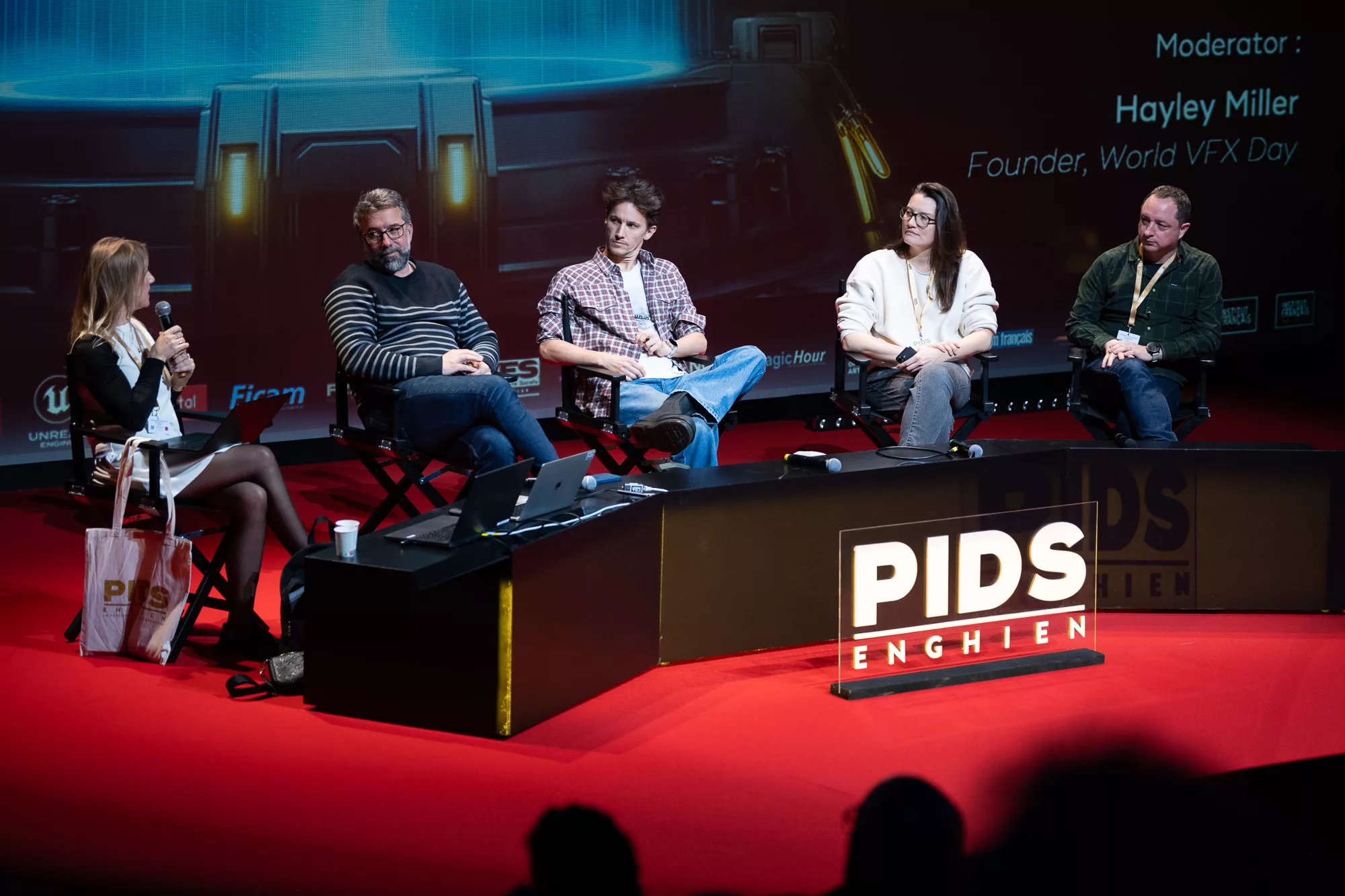
Photo credits : Pauline Maillet

Expansion Beyond Borders: Strategy, Networks, and Opportunity

For French studios expanding into the UK, motivations vary but converge around opportunity.

For Antoine Moulineau, opening Light’s London office felt natural. After two decades working in the UK and Canada, his professional network and familiarity with the market made expansion an organic step, through his history and local relationships.

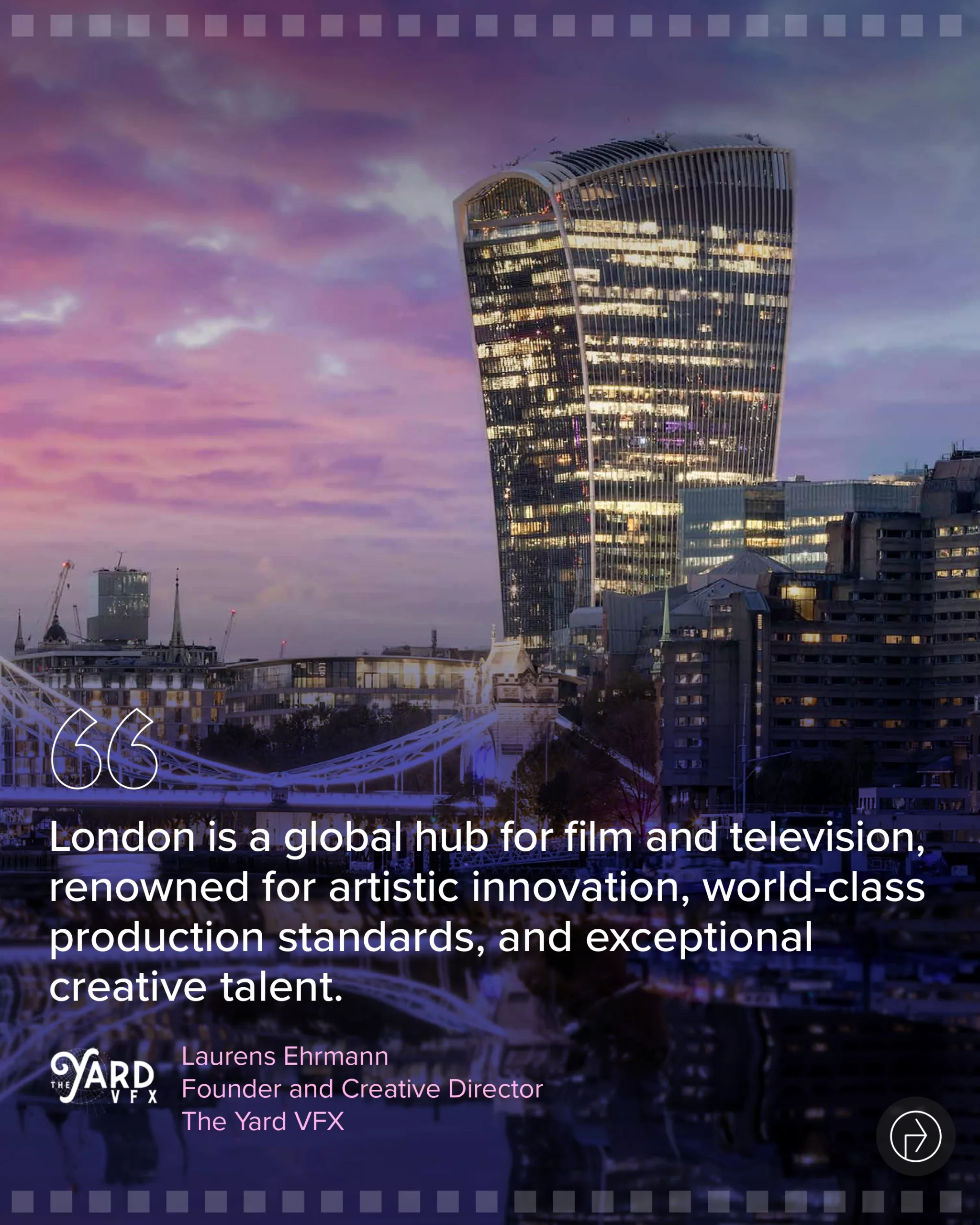
Laurens Ehrmann approached the UK from a strategic standpoint. As CEO, anticipating market shifts is part of the role. Discussions surrounding the reshaping of UK tax rebates caught his attention, amongst other factors, such as the presence of clients and the great talent pool. But the decisive factor was finding the right leadership in London. Expansion, he emphasized, is first and foremost about people.

On the other side of the Channel, Emmanuel Pichereau explained that One of Us’s expansion into France in 2021 was accelerated by two factors: the normalization of remote work post-COVID and the exceptional quality of graduates from France’s digital schools. Talent pool and flexibility were key.

Mathematic, while not yet physically established in London, registered in the UK to remain agile. Having previously expanded to Montreal and Los Angeles, the studio understands that entering a new territory requires time — to build teams, relationships, and credibility. For them, the UK’s depth of talent makes it attractive.

Tax Incentives: Catalyst, Not Compass

With the UK’s enhanced 29.5% tax incentive introduced in January 2025, the topic naturally surfaced.

The panel agreed that tax rebates do influence conversations, can trigger expansion decisions, and attract international projects. But all participants were unanimous on one point: tax credits alone do not sustain a business.

Laurens Ehrmann highlighted that while incentives open doors, clients ultimately care about capacity, reliability, and talent.

Building a strategy solely around tax credits is not viable long term. Markets shift and policies constantly evolve globally, while talent remains.

The panel also mentioned broader economic factors at play when choosing to expand in another country: currency fluctuations, competitive pressure, and political uncertainty.

Beyond tax rebates, the Franco-British axis offers mature production ecosystems, access to major studios and decision-makers (particularly in the UK), strong creative heritage, competitive infrastructure, among others.

The importance of physical presence in a hybrid world

Despite remote workflows becoming normalized, physical studios still matter. The panel mentioned that clients value review rooms, and direct access to supervisors and artists. They want to see where and with whom their projects are being made. This greatly impacted the decision to establish studios in London, where clients, including representatives of major studios, are located.

Laurens Ehrmann noted it took nearly a year of discussions in the UK before being able to bring clients into a real London office — a turning point in establishing trust.  The hybrid model may be here to stay, but credibility often still requires bricks and mortar.
France-headquartered VFX studio The Yard expands to London

An organic dynamic

According to the panel, the UK-France relationship is largely studio-led. While organizations such as BFI, UK Screen Alliance and CNC support the framework, much of the movement stems from people such as artists returning home post-Brexit, executives leveraging international networks, studios seeking resilience through diversification.

Still, Laurens Ehrmann highlighted that conversations with UK Screen Alliance and BFI were extremely insightful and that the UK’s organizations were all welcoming and greatly helped in the integration into the local ecosystem.

Brexit has, however, complicated mobility. Visa constraints make cross-border artist movement more challenging, reinforcing the need for distributed yet culturally aligned studios. The panel highlighted complementarities in the workforce between France and the UK, mentioning the UK’s strong pool of senior VFX and compositing supervisors, and France’s exceptional animation talent. Emmanuel Pichereau also shared his experience of accelerate knowledge transfer between countries in the context of shared projects within a same company, leading to a more European identity emerging beyond national labels.

Laurens Ehrmann added that the experience and expertise exposure comes also through the return of talent from abroad. He explained that The Yard attracted senior French talent, who developed a rich experience at international studios. Their experience contributes a lot to expose younger artists to the expectations of international clients.

Looking ahead : 2026 and beyond

Optimism defined the closing remarks. All panelists mentioned several large-scale projects are in discussion. While London currently attracts a higher concentration of major shows, Paris is increasingly positioned as a complementary powerhouse.

There is also growing demand from the US, with studios exploring localisation of production in Los Angeles and beyond. The future, it seems, is neither national nor bilateral—but global.

Meanwhile, AI is reshaping advertising and creative workflows, immersive projects are expanding, and new technologies are redefining pipelines. Innovation remains constant.

The France–UK VFX connection is no longer a convenient partnership. It is becoming a strategic axis by combining scale, specialization, cultural diversity, and resilience. As global production models evolve, this cross-Channel ecosystem may well define Europe’s competitive edge.

Press Enter / Return to begin your search or hit ESC to close.

New membership are not allowed.