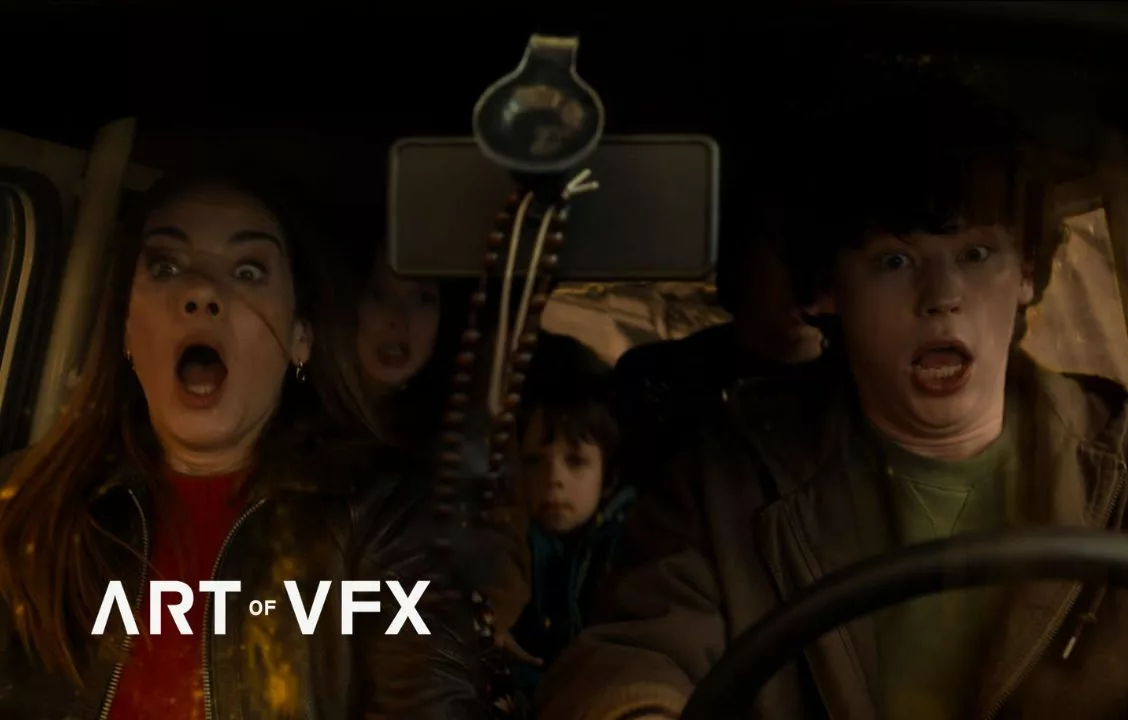
In a recent interview with Art of VFX, Adam Rowland, Production VFX Supervisor, reflects on the visual effects of The Family Plan 2, spotlighting The Yard’s key contribution to some of the film’s most ambitious sequences.
In his recent conversation with Art of VFX, Production VFX Supervisor Adam Rowland offers a detailed look at the making of The Family Plan 2, produced by Skydance and currently streaming on Apple TV. He tells how the film was built around ambitious action, international locations—between France and the UK—, and nearly 1,000 visual effects shots delivered under a tight schedule.
At the heart of the production was a clear creative mandate from director Simon Cellan Jones: the visual effects should never draw attention to themselves. However complex the execution, the result had to feel grounded, photographic, and seamless.
In the interview, Adam Rowland stresses the multiple VFX challenges on the project by highlighting the scope of work of some of the vendors, including The Yard VFX. You’ll find below some key highlights of the interview, that can be found on Art of VFX website here.
Precision work in the Paris car chase
The Montmartre car chase is one of the most complex sequences that was spotlighted in the article, where much of the most demanding work remains deliberately invisible.
Shot across narrow streets, icy cobblestones, practical stunt rigs, and multiple vehicle builds, the sequence required extensive environmental fixes in post. The stunt-driver exoskeleton mounted on the pod vehicle was often highly intrusive, obscuring large portions of the background — and occasionally overlapping with actors.
Rowland explained that The Yard VFX and Rodeo FX handled all the environmental cleanup and rig removal, reconstructing background architecture where needed and carefully preserving performance continuity.
Additionally, protective ramps installed over historic staircases had to be digitally removed and, in places, fully rebuilt in CG to restore the original stonework.
Notably, there are no fully CG cars and no entirely CG shots in this sequence. The realism comes precisely from how invisible the digital intervention remains.
Building Paris Rooftops
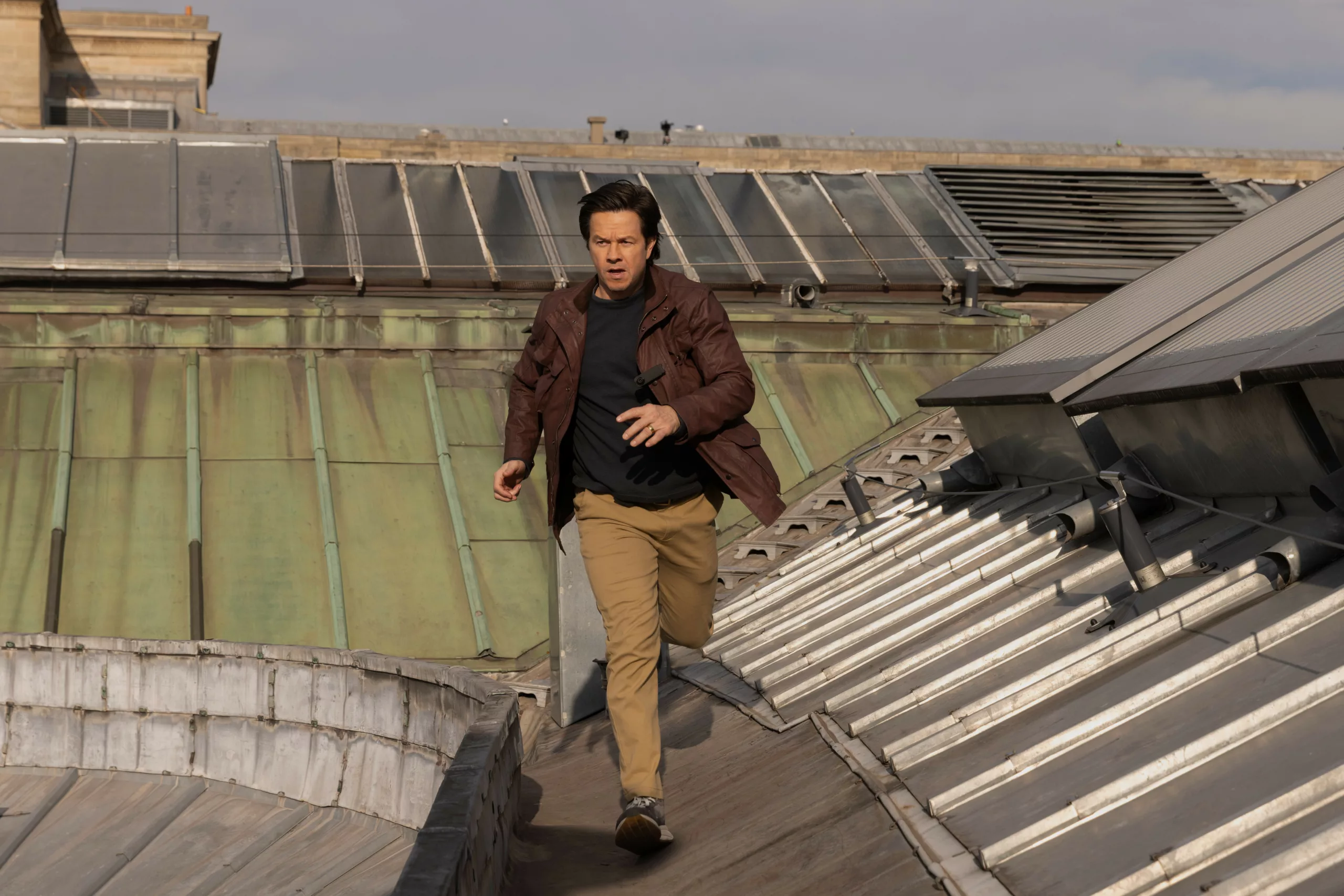
appears on screen as a fluid chase across iconic Parisian architecture was, in reality, a hybrid construction of studio builds in the UK, real Paris locations, LIDAR scans, stitched plate photography, and CG extensions.
Because many of the mansion rooftops were inaccessible, early data acquisition became critical. During principal photography in Paris, The Yard supervised the capture of extensive 360-degree plates from elevated positions along the rooflines of Île Saint-Louis. The team also captured rooftop plates overlooking Place du Tertre, which were later used for views from Svetlana’s apartment.
These weren’t simply background elements — they became foundational environmental assets. The material provided precise visual reference for skyline continuity, river visibility, architectural density, and lighting direction. That real-world data would later inform both previs development and final CG builds.
Back in the UK, partial rooftop sets were shot against bluescreen months before the Paris location work took place. The challenge was substantial: how do you ensure seamless intercutting between environments filmed in different countries, at different times, under different lighting conditions?
The answer lay in building a fully integrated 360° environment.
As Rowland explains, The Yard carried out the majority of this work, constructing the rooftop world as a combination of stitched plates and CG geometry. The team carefully matched lighting between low-ceiling studio setups and real Paris exteriors, ensuring that cuts between practical and digital environments felt invisible.
The result is a sequence that feels entirely cohesive — even though it was assembled from multiple physical and digital components.
The Saint-Sulpice Transition Shot
One of the film’s most ambitious creative solutions emerged in the edit. To bridge the mansion rooftop and the church chase that follows, Rowland proposed a dramatic crane-style shot rising above the Paris skyline toward the towers of Saint-Sulpice.
What began as an editorial solution became a technically demanding CG undertaking.
Using extensive 3D and texture data from LIDAR scans, The Yard delivered the full CG environment for this landmark shot, recreating architectural detail and matching the lighting continuity of surrounding live-action material.
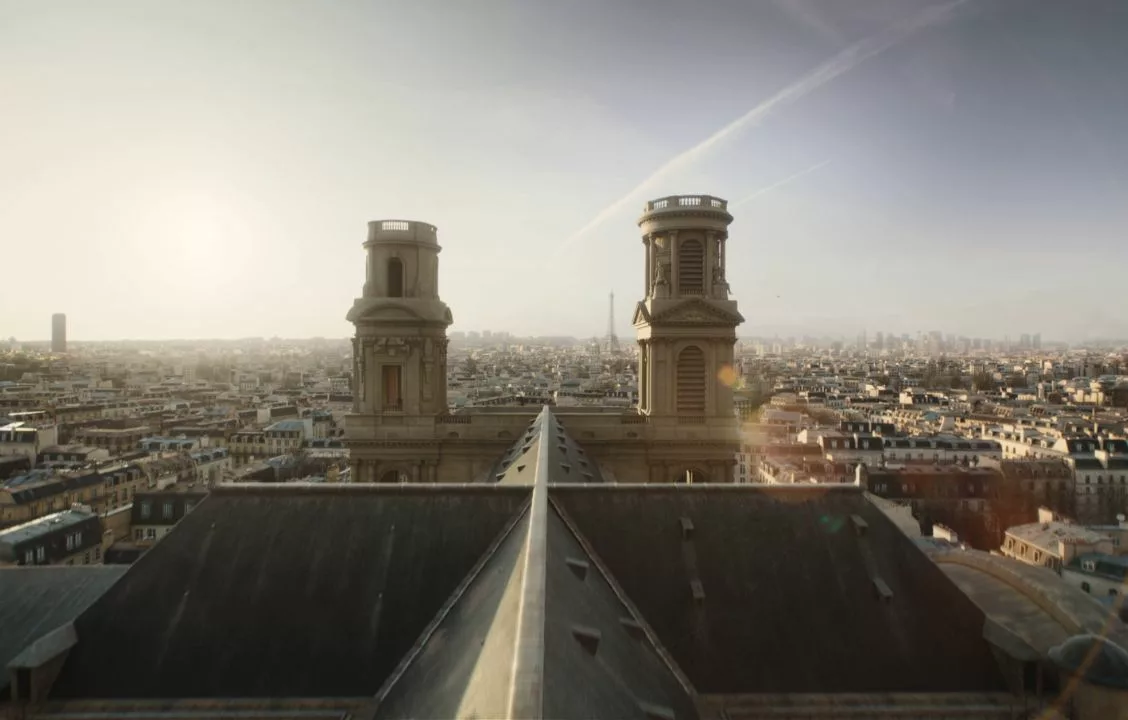
For The Yard, The Family Plan 2 represents a showcase of environment integration at scale: combining plate capture, architectural reconstruction, full-CG transitions, and invisible stunt cleanup into a seamless cinematic experience.
To discover the full scope of the production—from the London bus fight to Buffalo scenes and the broader vendor collaboration, read the complete interview of Adam Rowland here.